
Diabetes-Friendly Indian Diet Foods to Eat & Avoid 7 Day Meal Plan
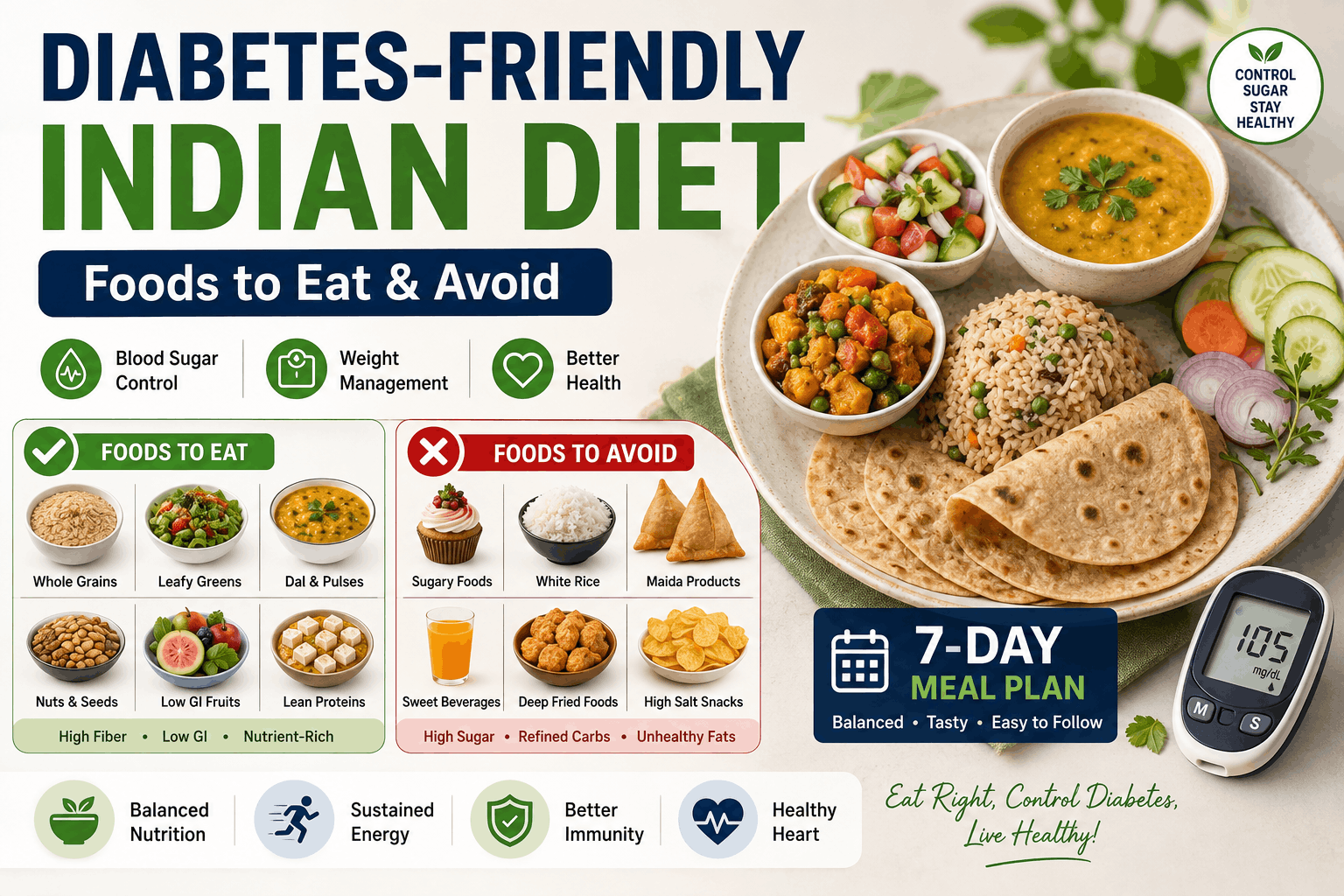
Quick answer: A diabetes-friendly Indian diet focuses on low-glycemic-index foods — millets (jowar, bajra, ragi), whole dals and legumes, non-starchy vegetables, and moderate portions of whole grains — while limiting refined carbs like maida, white rice, sugary sweets, and fried snacks. The goal isn't eliminating carbs entirely; it's choosing carbs that raise blood sugar slowly and pairing them with protein and fibre. This article is for general information only and is not a substitute for medical advice — always consult your doctor or a registered dietitian before making significant changes to your diet, especially if you're on diabetes medication.
Type 2 diabetes has become one of India's most widespread health concerns — recent estimates suggest around 101 million adults in India live with diabetes, with another 136 million showing signs of prediabetes, and a large share remain unaware of their condition until complications appear. Despite this, one of the most common pieces of advice people receive after a diagnosis is incomplete and often unhelpful: "stop eating rice, stop eating sugar, stop eating everything you enjoy." That approach usually backfires — people either follow a miserable, restrictive diet for a couple of weeks and give up, or they don't change anything at all. The reality is that a traditional Indian diet, thoughtfully adjusted, can absolutely support healthy blood sugar levels. This guide covers what a diabetes-friendly Indian diet actually looks like, the foods to eat and reduce, a sample weekly meal plan, and practical swaps that don't require abandoning ghar ka khana.
Understanding Glycemic Index — The Foundation of Diabetes-Friendly Eating
The Glycemic Index (GI) ranks carbohydrate-containing foods on a scale of 0 to 100 based on how quickly they raise blood sugar after eating, with pure glucose set as the reference point at 100. Low-GI foods (55 or below) are digested and absorbed more slowly, leading to a gradual rise in blood glucose rather than a sharp spike. Medium-GI foods fall between 56 and 69, and high-GI foods (70 and above) cause the fastest, sharpest increases.
Most traditional Indian dals — moong, masoor, and chana dal — have notably low GI values, generally in the range of 26 to 38, making legumes one of the most naturally diabetes-friendly components of Indian cuisine. Millets like jowar, bajra, and ragi also score significantly lower than polished white rice or maida-based products. It's worth noting that GI values are approximate and can shift depending on ripeness, cooking method, and what a food is eaten alongside — pairing a higher-GI food with protein, fibre, or healthy fat generally blunts its overall impact on blood sugar.
A related concept, Glycemic Load (GL), factors in both the GI of a food and the actual amount of carbohydrate in a typical serving — useful because a food can have a high GI but a low GL if you only eat a small portion of it, and vice versa.
Best Indian Foods for Blood Sugar Control
These aren't exotic superfoods — they're ingredients already sitting in most Indian kitchens.
Millets (Jowar, Bajra, Ragi)
Millets are lower on the glycemic index than wheat and significantly lower than polished white rice, while offering more fibre. They can replace wheat rotis, be cooked as a porridge, or used in place of rice in a meal — a simple, high-impact swap for anyone managing blood sugar.
Dals and Legumes
Moong dal, masoor dal, chana dal, rajma, and sprouts are excellent sources of both protein and fibre, and protein has a minimal direct effect on blood glucose while helping prevent the post-meal "sugar rush" that refined carbs alone can cause. Including a generous portion of dal at both lunch and dinner is one of the simplest structural changes to make.
Bitter Gourd (Karela)
Karela is one of the most commonly recommended vegetables for blood sugar support in Indian dietary tradition, and is widely used both cooked as a sabzi and juiced. As with any specific food, it should be treated as one part of an overall dietary pattern rather than a standalone fix.
Fenugreek (Methi)
Methi seeds contain a natural compound called galactomannan, which is known to slow the rate at which carbohydrates are digested and absorbed. A common traditional practice is soaking methi seeds overnight and consuming the water first thing in the morning, alongside using methi leaves in cooking.
Non-Starchy Vegetables
Spinach (palak), cauliflower, bell peppers, cabbage, and amaranth are low in calories and carbohydrates while being rich in fibre and micronutrients like magnesium — they can be eaten fairly liberally and should ideally fill roughly half your plate at most meals.
Curd (Dahi)
Plain, unsweetened curd is a good source of protein and probiotics, and pairing it with a meal can help balance the overall glycemic response — though it's worth choosing plain curd over sweetened or flavored varieties, which often carry hidden added sugar.
Nuts and Seeds
Almonds, walnuts, and flaxseeds provide healthy fats and fibre, and make a better snack choice than biscuits or namkeen since they don't cause the sharp blood sugar spikes refined, packaged snacks typically do.
Foods to Limit or Avoid
The goal isn't permanently eliminating every item on this list — it's understanding their impact and consuming them more mindfully, in smaller portions, and less frequently.
- Refined flour (maida): Found in naan, puri, white bread, biscuits, and most bakery items — spikes blood sugar quickly due to a near-total lack of fibre.
- White rice: High glycemic index. This doesn't mean never eating rice again — reducing portion size and pairing it with dal, vegetables, and curd, or switching to brown or hand-pounded rice, meaningfully softens its impact.
- Sugary foods and drinks: Sweets, pastries, candies, and carbonated soft drinks cause the sharpest, fastest blood sugar spikes of any food category.
- Deep-fried snacks: Samosas, pakoras, and similar fried items are typically high in refined carbs and unhealthy fats together, a particularly unfavorable combination.
- Full-fat dairy in excess: Cream, full-fat milk, and cheese in large quantities can contribute to weight gain, which itself worsens insulin resistance over time.
- Excess salt and processed foods: Pickles, canned soups, and processed meats are worth limiting for overall cardiovascular health, which is especially important for people managing diabetes.
- Fruit juices: Even 100% fruit juice lacks the fibre of whole fruit and is absorbed much faster — whole fruits like guava, apple, and pear are far better choices than their juiced equivalents.
How to Build a Diabetes-Friendly Plate
Rather than counting every calorie or gram, a simple visual framework tends to be far easier to sustain long-term: divide your plate into roughly 50% non-starchy vegetables, 25% lean protein (dal, paneer, tofu, eggs, or fish), and 25% complex carbohydrates (millets, brown rice, or whole wheat, in controlled portions). This ratio keeps blood sugar more stable while still leaving you full and satisfied — which matters enormously for whether a dietary change is actually sustainable rather than something you abandon within weeks.
A few additional habits that support this structure:
- Eat smaller, more frequent meals rather than two or three very large ones, to avoid sharp spikes and crashes.
- Always pair a carbohydrate with protein or fibre — plain rice or roti alone digests faster than the same food eaten alongside dal and vegetables.
- Use acidic elements like lemon juice or vinegar in salads and meals, which can help moderate the overall glycemic response of a meal.
- Avoid heavy or very late dinners, which can affect blood sugar control overnight and into the next morning.
- Aim for roughly 25-35 grams of dietary fibre daily — achievable through a combination of dals, vegetables, whole fruits, and millets.
Sample 7-Day Diabetes-Friendly Indian Meal Plan
This sample plan uses familiar, everyday Indian ingredients rather than specialty health-food items, so it's realistic to sustain as part of normal family cooking.
| Day | Breakfast | Lunch | Dinner |
|---|---|---|---|
| Mon | Masala oats + 1 boiled egg | Small portion brown rice, yellow dal, cucumber salad | 2 multigrain rotis, sautéed paneer & capsicum |
| Tue | Moong dal chilla with mint-coriander chutney | Jowar roti, mixed vegetable curry | Grilled fish or tofu, sautéed green beans & carrots |
| Wed | Vegetable upma with peanuts and peas | Quinoa or dalia pulao, bowl of plain curd | 1 multigrain roti, lauki (bottle gourd) sabzi |
| Thu | Mixed sprouts salad with onion and tomato | Bajra roti, chana dal, salad | Paneer bhurji with capsicum, small bowl of dal |
| Fri | Besan chilla with tomato chutney | Ragi roti, palak paneer, curd | Vegetable soup, grilled chicken or tofu skewers |
| Sat | Vegetable dalia with a small bowl of curd | Small portion brown rice, rajma, salad | 2 jowar rotis, bhindi (okra) sabzi |
| Sun | Poha with peanuts and vegetables | Multigrain roti, mixed dal, sautéed greens | Grilled paneer or fish, stir-fried vegetables |
Portion sizes and specific food choices should be adjusted based on your individual health status, weight goals, medication, and any guidance from your doctor or dietitian — this plan is a general template, not a prescription.
Smart Swaps for Common Indian Foods
| Instead of | Try |
|---|---|
| White rice | Brown rice, hand-pounded rice, or cauliflower rice |
| Wheat roti (refined atta) | Bajra, jowar, or ragi roti |
| Naan / white bread | Multigrain roti or whole wheat roti |
| Fruit juice | Whole fruit (guava, apple, pear, berries) |
| Biscuits / namkeen | Roasted chana, nuts, or seeds |
| Sweetened chai | Chai with little to no added sugar, or cinnamon for natural sweetness |
| Deep-fried snacks | Roasted or air-fried versions of the same snack |
Beyond Diet — Other Factors That Affect Blood Sugar
Diet alone typically isn't enough for effective blood sugar management — it works best combined with other lifestyle habits. Around 30 minutes of brisk walking, especially after meals, helps improve insulin sensitivity and can meaningfully blunt post-meal blood sugar spikes. For people with Type 2 diabetes who are overweight, even modest weight loss has been shown to significantly improve blood sugar control. Adequate sleep and stress management also play a real role, since poor sleep and chronic stress can both worsen insulin resistance over time.
Common Questions About Specific Foods
Can I still eat rice?
Yes — in moderation. White rice has a high glycemic index, so limiting portion size and pairing it with dal, vegetables, and curd helps reduce its overall impact. Switching to brown rice or hand-pounded rice is an additional option worth considering.
Can I still drink chai?
Yes, with less sugar — or none at all. The tea itself isn't the concern; it's the added sugar that matters most for blood glucose.
Is roti better than rice for diabetes?
Roti made from whole wheat or multigrain flour generally has a somewhat lower glycemic impact than white rice, though portion size and what it's paired with matter just as much as the choice between the two. Millet-based rotis (bajra, jowar, ragi) are generally the lowest-GI option among Indian flatbreads.
Navigating Festivals and Eating Out
Indian festivals and social occasions revolve heavily around food, and this is often where diet plans break down — not because the underlying approach is wrong, but because an all-or-nothing mindset makes special occasions feel like failures. A more sustainable approach is portion control rather than total avoidance: a small piece of mithai eaten slowly, alongside a normal meal rather than on an empty stomach, has a very different effect than a large helping eaten quickly on its own. Eating a normal, balanced meal with vegetables and protein before a gathering — rather than arriving hungry — also naturally limits how much of the more indulgent food you're likely to eat.
When eating out, similar principles apply. Tandoori and grilled preparations are generally better choices than deep-fried or heavily battered dishes. Requesting less oil or asking for gravy on the side gives you more control over portion size. Choosing dal, sabzi, and a small portion of roti or rice over a heavy biryani or a creamy, cashew-based curry is usually the more blood-sugar-friendly option on most restaurant menus, without requiring you to skip dining out altogether.
Understanding Natural and Artificial Sweeteners
A common question after a diabetes diagnosis is whether sugar substitutes are a safe way to still enjoy sweetness. The honest answer is that it depends on the type and how it's used:
- Jaggery (gur): Often assumed to be a "healthier" alternative to sugar, but jaggery still significantly raises blood sugar and should be treated similarly to regular sugar rather than as a free substitute.
- Honey: Similarly, honey is still a concentrated source of sugar and affects blood glucose in largely the same way as table sugar, despite its natural origin.
- Stevia: A plant-derived, zero-calorie sweetener that doesn't raise blood sugar, making it one of the more commonly recommended substitutes for tea, coffee, or light desserts.
- Artificial sweeteners (sucralose, aspartame): Generally considered safe for blood sugar management in moderate amounts, though individual tolerance and any specific medical guidance should be factored in.
The broader principle worth remembering: the goal isn't finding a "safe" sugar to eat freely — it's gradually reducing overall reliance on intensely sweet flavors, which also tends to reduce sugar cravings over time.
Snacking Without Spiking Blood Sugar
Mid-morning and evening snack cravings are often where blood sugar control quietly falls apart, since packaged snacks are usually refined-carb-heavy with little fibre or protein to slow absorption. A few practical, genuinely satisfying alternatives:
- Roasted chana or makhana (fox nuts) instead of chips or namkeen
- A small bowl of sprouts salad with lemon and chaat masala
- A handful of almonds or walnuts, which combine healthy fat and fibre
- Cucumber or carrot sticks with hummus or a light yogurt-based dip
- A boiled egg, which offers protein with essentially no impact on blood sugar
Timing matters too — spacing snacks a few hours away from main meals, rather than grazing continuously throughout the day, tends to support more stable blood glucose levels overall.
Frequently Asked Questions
What is the best diet for diabetes in India?
A diabetes-friendly Indian diet emphasizes low-glycemic-index foods — millets, whole dals and legumes, non-starchy vegetables, and moderate portions of whole grains — while limiting refined flour, white rice, sugary foods, and fried snacks. Building meals around roughly 50% vegetables, 25% protein, and 25% complex carbohydrates is a practical, sustainable framework.
What foods should a diabetic avoid completely?
Very few foods need to be eliminated entirely for most people — the emphasis is generally on reducing frequency and portion size of high-GI foods like sugary sweets, sweetened beverages, refined flour products, and deep-fried snacks, rather than banning them outright. Individual recommendations can vary, so it's best to follow guidance from your doctor or dietitian.
Which Indian grain is best for diabetes?
Millets — particularly bajra, jowar, and ragi — generally have a lower glycemic index and higher fibre content than wheat or white rice, making them a strong choice for blood sugar management when used in place of refined grains.
Does karela (bitter gourd) actually help control blood sugar?
Karela is widely used in Indian dietary tradition for blood sugar support and is a genuinely low-GI, nutrient-dense vegetable. It should be viewed as one supportive part of an overall diabetes-friendly diet rather than a standalone treatment, and shouldn't replace prescribed medication without medical guidance.
How much fibre should someone with diabetes eat daily?
A general target is around 25-35 grams of dietary fibre per day, achievable through a combination of dals, legumes, non-starchy vegetables, whole fruits, and millets — fibre slows carbohydrate absorption and supports more stable blood sugar levels.
Is a diabetic diet different for prediabetes versus Type 2 diabetes?
The core dietary principles — favoring low-GI foods, adequate fibre, and balanced portions — are broadly similar for both, though specific targets and any medication considerations can differ. Anyone with prediabetes or Type 2 diabetes should work with their doctor or a registered dietitian to tailor an approach to their individual situation.
Medical disclaimer: This article is intended for general informational purposes only and does not constitute medical or nutritional advice. Diabetes management needs vary significantly based on individual health status, medication, and other factors. Please consult your doctor or a registered dietitian before making significant changes to your diet, particularly if you are currently taking diabetes medication, as dietary changes can affect blood sugar levels and medication requirements.
Last updated: 11 August 2026.
By : ravi
By : ravi
By : ravi
By : ravi
By : ravi
By : ravi
By : ravi
By : ravi
By : ravi
By : ravi